Shared macro modernization
Multiple tenants added capacity on existing infrastructure, reducing redundant construction while improving Sub-6 coverage and power monitoring.
Metric: kgCO2e/Gbps-km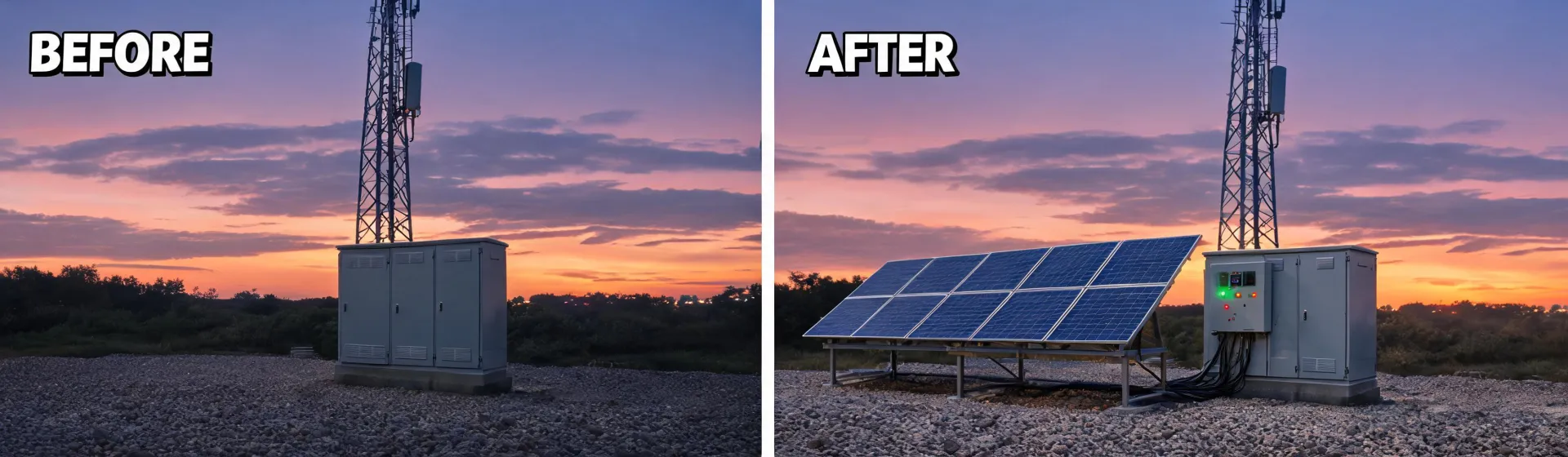
Sustainability in telecom is measured in operating details: watts per transported Gbps, site visits avoided, shared tower utilization, generator runtime, and kgCO2e per Gbps-km. American Tower focuses on those practical levers because a greener network still has to meet coverage, uptime, safety, and restoration expectations.
The savings conversation starts with inputs a network team already tracks: number of sites, radio power draw, backhaul reach, cabinet cooling, and truck-roll frequency. A shared infrastructure model can reduce duplicated steel, simplify permitting, and improve equipment utilization. It also makes sustainability measurable because power and maintenance improvements are tied to service units such as Gbps, PoP, or covered square kilometers.
Use this as a planning model, not a guarantee. Final numbers depend on region, grid mix, radio class, cooling load, and access constraints.
Multiple tenants added capacity on existing infrastructure, reducing redundant construction while improving Sub-6 coverage and power monitoring.
Metric: kgCO2e/Gbps-kmMetro traffic was moved closer to radio aggregation, cutting unnecessary transport hops and improving latency-sensitive service planning.
Metric: kWh/PoPBetter NOC alarm naming and access rules reduced repeat truck rolls, lowering restoration emissions and improving MTTR.
Metric: visits/site/yearCabinet airflow tuning, IEEE 802.3bt PoE budget rebalancing, SyncE timing consolidation, and selective 400G ZR+ coherent optics on the metro core all contribute small reductions that compound across hundreds of shared towers. The biggest single lever remains carrier-neutral colocation, which removes the duplicated steel, generators, and HVAC that an isolated buildout would otherwise require for the same Gbps of throughput.
Share site count, target throughput, power profile, and expected service windows. We will help frame practical efficiency options around shared infrastructure, backhaul, and field operations.