5G macro and antenna upgrades
Coordinate tower loading, RF review, feeder routes, grounding, and tenant access for Sub-6 and selected mmWave deployments where coverage reliability matters.
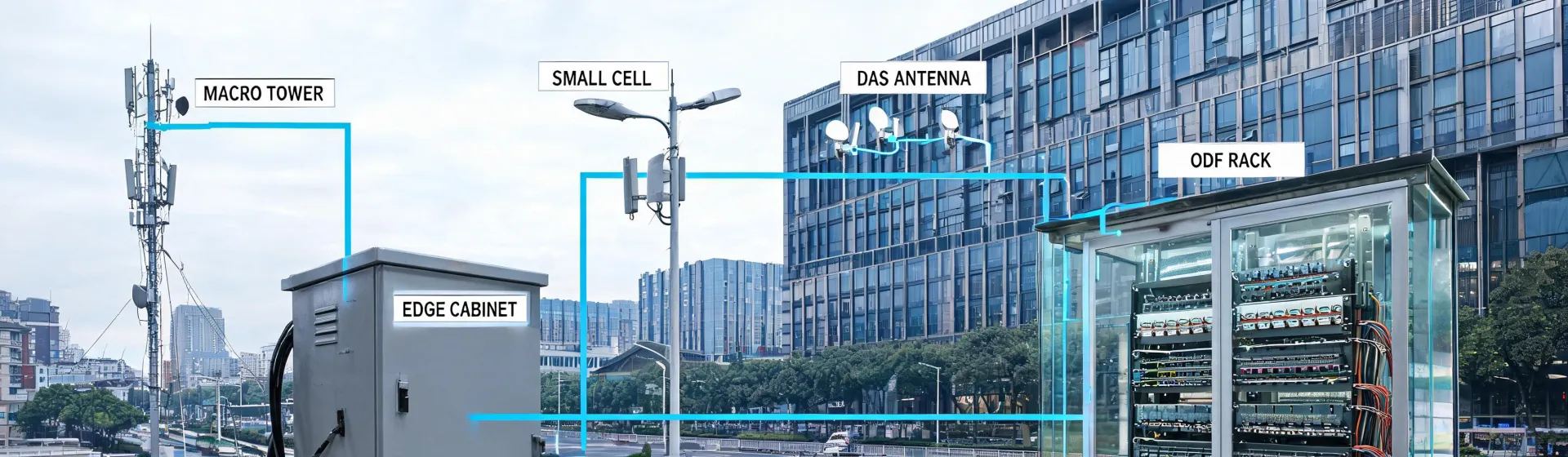
American Tower helps network teams match infrastructure type to operating need. Macro towers solve coverage and capacity at height. Small cells and DAS solve density and indoor availability. Edge colocation reduces transport distance for latency-sensitive traffic. Fiber and power planning make each solution maintainable after the launch date.
Coordinate tower loading, RF review, feeder routes, grounding, and tenant access for Sub-6 and selected mmWave deployments where coverage reliability matters.
Plan indoor distributed antenna systems around spectrum objectives, ceiling access, cable pathways, commissioning tests, and NOC alarm ownership.
Position compute closer to radio aggregation and metro traffic flows with practical power, cooling, security, and fiber handoff considerations.
Support LoRaWAN, NB-IoT, smart grid telemetry, and public-sector sensor networks with site access and restoration discipline.
Reliable infrastructure solutions are not chosen by trend labels. They are chosen by the operational outcome: more coverage, more capacity, lower latency, better restoration, or lower energy intensity. American Tower keeps the solution discussion grounded in measurable details such as band, dB loss, route length, power budget, cabinet footprint, and the escalation steps a NOC can actually use. That is especially important when a shared site serves several tenants with different engineering calendars.
Our approach is to make the hidden constraints visible early. If the project needs a tower, we clarify loading, access, RF exposure, and backhaul. If the project needs DAS, we clarify venue access, walk-test method, cable paths, and commissioning windows. If the project needs edge, we clarify fiber, latency target, rack power, and handoff ownership. That reliable-partner discipline helps teams avoid rework after capital is committed.
Solution selection is also where we record the band plan, AAU and RRU mounting envelope, ORAN 7.2x split assumptions, IEEE 1588v2 timing reference, OS2 fiber count to the cabinet, and the IP67 enclosure profile for outside plant. Those records become the single source of truth for any later optimization round, whether it is a Sub-6 capacity layer, a mmWave hot-spot pilot, a 6 GHz Wi-Fi backhaul handoff, or a smart grid sensor overlay riding the same site lease.